
Date: 24–26 February 2026
Venue: AH Hotel, East Legon, Accra
Prepared by: Dr. Charles Takyi, General Secretary
Date of Report: 6 March 2026
1. Introduction
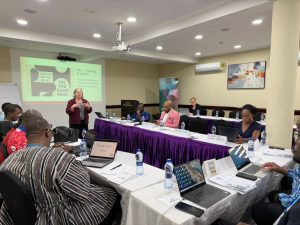 The Society of Obstetricians and Gynaecologists of Ghana (SOGOG) held a three-day Governance and Leadership Workshop from 24–26 February 2026 at AH Hotel, East Legon, Accra.
The workshop brought together current and former SOGOG executives, regional representatives, members of key committees, SOGOG secretariat staff, and representatives from the Society of Obstetricians and Gynaecologists of Canada (SOGC) and Oxfam Ghana.
The primary objective of the workshop was to:
A total of 20 participants attended the workshop. 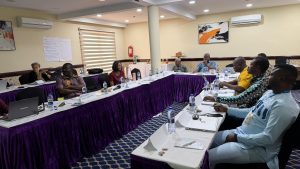
2. Participants
Participants included:
Current Executive Committee
Former Executives
Committee Representatives
Regional Representatives
Institutional Partners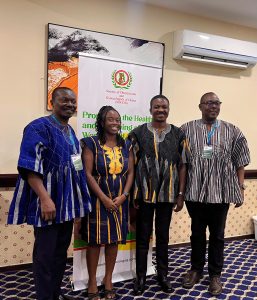
Secretariat Staff
3. Day One: Governance Foundations and Global Context
Opening and Workshop Orientation
The workshop began with introductions and clarification of expectations. The consultant outlined the objectives, agenda, and expected outcomes, emphasizing the importance of strengthening SOGOG’s governance systems.
Participants were introduced to the SOGOG Governance and Operations Manual (SOGOG-GOM), which is intended to guide the Society’s governance, strategic direction, and operational management.
Presentation: SOGOG Governance and Operations Manual
The consultant highlighted the importance of:
Participants discussed how the manual should remain adaptable to the evolving needs of the Society.
Learning from International Experience
Representatives from SOGC shared insights on their organizational structure and activities, including:
These examples provided useful lessons for strengthening SOGOG’s institutional capacity.
Global Challenges Affecting Professional Societies
A session on global geopolitical changes and their impact on civil society organizations highlighted several issues affecting professional societies:
Participants emphasized the importance of professional societies advocating for women’s health and reproductive rights, while encouraging governments to increase funding for key health programs.
Governance and Team-Building Sessions
The afternoon focused on strengthening board effectiveness through discussions on:
Participants also discussed SOGOG’s strategic priorities and institutional direction.
4. Day Two: Strategic Planning, Compliance and Institutional Management
Regulatory Compliance in Ghana
A presentation by the General Secretary reviewed SOGOG’s legal and regulatory obligations as a registered professional body and NGO in Ghana.
Key requirements include:
The discussion emphasized the need for consistent compliance and proper administrative systems.
Strategic Plan Implementation
The Executive reviewed the SOGOG Strategic Plan (2024–2029), including:
The Immediate Past General Secretary presented progress made in the first year of implementation and highlighted key challenges.
Financial Status of SOGOG
The Treasurer presented an overview of the Society’s current financial situation and its alignment with strategic priorities.
The discussion focused on:
5. Key Strategic Decisions
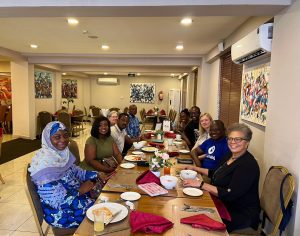
During a strategic breakout session between former and current executives, several important decisions were taken:
 Institutional Strengthening
Secretariat Management
Communications and Visibility
Planning for the 2026 AGSM
6. Day Three: Leadership Development and Organizational Alignment
The final day focused on leadership development and team cohesion.
Discussions explored:
Participants also reviewed the final draft of the SOGOG Governance and Operations Manual, which was validated during the workshop.
7. Key Outcomes of the Workshop
The workshop achieved several important outcomes:
8. Conclusion
The workshop successfully met its objectives and provided a strong foundation for improving governance, leadership, and institutional sustainability within SOGOG.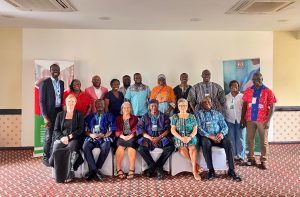
Participants reaffirmed their commitment to strengthening the Society’s role in advancing women’s health and reproductive health services in Ghana.
The meeting ended with a debriefing session between SOGOG, SOGC, and Oxfam Ghana representatives to discuss future collaboration beyond the current partnership period ending in 2027.
Submitted by
Dr. Charles Takyi
General Secretary
Society of Obstetricians and Gynaecologists of Ghana (SOGOG)